

Are classical desk clocks difficult to assemble?
Sep 19, 2025
Hey there! As a supplier of Classical Desk Clocks, I often get asked if these beauties are difficult to assemble. Well, let's dive right into it and find out.
First off, let me introduce you to our range of Classical Desk Clock. These clocks are not just time - tellers; they're pieces of art. They bring a touch of old - world charm to any room, whether it's your study, bedroom, or office.
When it comes to the assembly process, it's not as intimidating as it might seem at first glance. Most of our classical desk clocks come with a detailed instruction manual. Yeah, I know, manuals can be a bit of a bore to read, but trust me, they're your best friend here. The instructions are written in plain English, step - by - step, so even if you're not the most DIY - savvy person, you can follow along.
Let's break down the assembly parts. Usually, a classical desk clock consists of a clock face, hands, a movement mechanism, and a case. The case is often pre - assembled, which is a huge plus. You just need to attach the movement mechanism to the case. This is usually as simple as aligning the holes and using the provided screws. It might take a bit of patience to get the screws in just right, but with a small screwdriver, you'll be good to go.
Next up are the clock hands. This is where a lot of people get a little nervous. But again, it's not rocket science. The hands are marked to show which one is the hour hand, the minute hand, and the second hand. You simply place them on the spindle of the movement mechanism in the correct order. Make sure they're centered and straight. It might take a couple of tries to get them looking perfect, but once you do, it's a satisfying feeling.
Now, let's talk about some of the more complex models. We also offer Metal Twin Bell Alarm Clock and Double Bell Metal Alarm Clock. These clocks have an additional alarm mechanism. The assembly of the alarm part might seem a bit tricky, but it's still doable. The alarm usually has a set of bells, a hammer, and a small spring - loaded mechanism. The instruction manual will guide you on how to attach these parts correctly so that the alarm works properly.
One thing to keep in mind is that taking your time is key. Don't rush through the assembly. If you make a mistake, it can be a pain to fix. So, find a quiet place, lay out all the parts, and take your time to read the instructions. You might even want to have a cup of coffee or tea nearby to keep you relaxed.
Another tip is to have the right tools on hand. A small set of screwdrivers, a pair of tweezers (for those tiny parts), and maybe a magnifying glass if your eyes aren't as sharp as they used to be. Having these tools will make the assembly process much smoother.
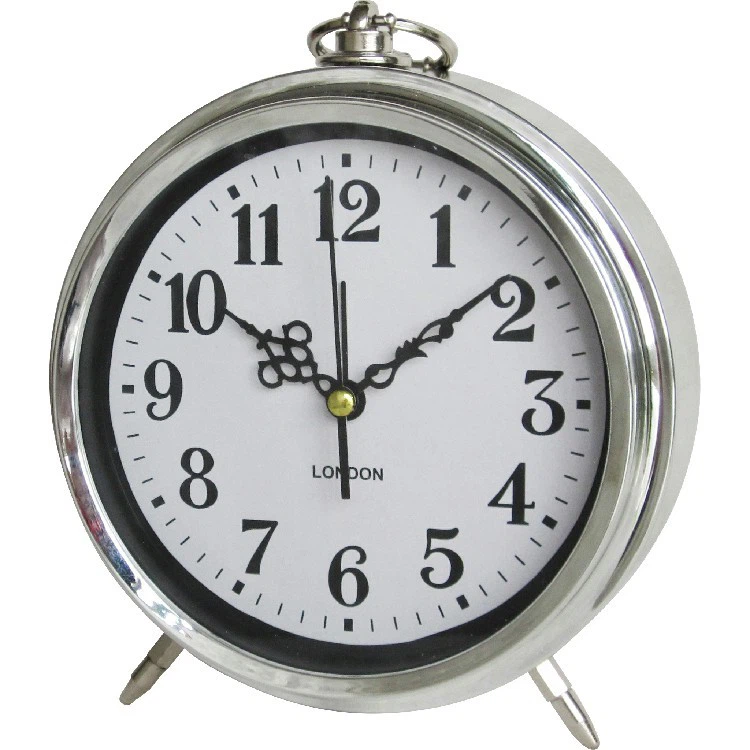

In my experience, most customers who buy our classical desk clocks are able to assemble them without any major issues. Sure, there might be a few hiccups along the way, but that's part of the fun. It's like a little DIY project that results in a beautiful, functional clock.
If you're still worried about the assembly, don't be. Our customer support team is always here to help. We can answer any questions you might have and guide you through the process over the phone or via email.
Now, if you're thinking about adding one of these amazing classical desk clocks to your collection or if you're a retailer looking to stock our products, we'd love to hear from you. We offer great prices, high - quality products, and excellent customer service. Whether you're interested in the classic desk clocks, the metal twin bell alarm clocks, or the double bell metal alarm clocks, we've got you covered.
So, don't hesitate to reach out for a quote or to discuss your purchasing needs. We're looking forward to working with you and helping you bring these timeless pieces into your life or business.
References
- Personal experience as a Classical Desk Clock supplier
- Customer feedback on assembly processes