

Are digital wall clocks more energy - efficient than analog ones?
Sep 29, 2025
Hey there! As a supplier of digital wall clocks, I often get asked whether digital wall clocks are more energy-efficient than analog ones. It's a great question, and one that I'm happy to dive into. In this blog post, I'll share my insights based on my experience in the industry and some good old common sense.
Let's start with a quick overview of how each type of clock works. Analog wall clocks are the classic timepieces we've all grown up with. They have hands that move around a dial to show the time. These clocks are usually powered by either a battery or a mechanical spring mechanism. On the other hand, digital wall clocks display the time in numerical digits, and they're typically powered by electricity or batteries.
Now, let's talk energy efficiency. Energy efficiency is all about how much energy a device uses to perform its function. In the case of clocks, the main function is to tell the time accurately.
Energy Consumption of Analog Wall Clocks
First, let's look at analog wall clocks. If an analog clock is mechanical, it relies on a wound spring to keep time. This means that the only energy it uses is the energy you put into winding it up, which is human energy! Once you wind it, it can run for days without using any additional power. However, most modern analog clocks are battery-powered. These batteries need to be replaced regularly, usually every few months to a year, depending on the clock. The energy consumption of a battery-powered analog clock is relatively low, but it does add up over time, especially if you have multiple clocks in your home or office.

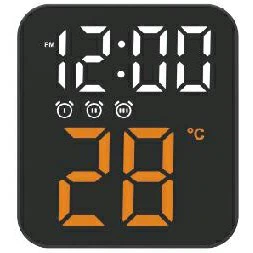
Energy Consumption of Digital Wall Clocks
Digital wall clocks have a different energy profile. If they're plugged into an electrical outlet, they draw a small amount of power continuously. But the amount of power they use is often very low. For example, many digital clocks use LED (Light Emitting Diode) technology. LEDs are known for being extremely energy-efficient. They use a fraction of the energy that traditional incandescent bulbs use.
Take a look at our LED Large Screen Clock. This clock uses state-of-the-art LED technology to display the time clearly and brightly. The LEDs in this clock consume very little power, making it an energy-efficient choice. Another great option is our LED Display Wall Clock. It also uses LED technology to show the time, and it's designed to be as energy-efficient as possible.
Some digital clocks are also battery-powered. These clocks can run for a long time on a single set of batteries. Our LCD Wall Clock is a perfect example. LCD (Liquid Crystal Display) technology is also quite energy-efficient. It doesn't require a lot of power to display the time, so the batteries last a long time.
Comparing the Two
When it comes to comparing the energy efficiency of analog and digital wall clocks, it really depends on a few factors. If you're using a mechanical analog clock, it's technically the most energy-efficient option because it doesn't use any external power sources. But if you're using a battery-powered analog clock, you'll need to factor in the cost and environmental impact of constantly replacing the batteries.
Digital wall clocks, especially those with LED or LCD technology, tend to be very energy-efficient. They use less power than many other electronic devices, and in some cases, they can run for a long time on a single set of batteries or a small amount of electricity from an outlet.
Another thing to consider is the lifespan of the clocks. Digital clocks often have a longer lifespan than analog clocks. This means that you won't have to replace them as often, which can also save energy and money in the long run.
The Environmental Impact
In addition to energy efficiency, we also need to think about the environmental impact of these clocks. Battery disposal is a big issue. When you throw away old batteries from analog clocks, they can end up in landfills and release harmful chemicals into the environment. Digital clocks that are plugged into the wall use electricity, which can come from renewable sources like solar or wind power. This makes them a more environmentally-friendly option in some cases.
Why Choose Our Digital Wall Clocks
As a supplier of digital wall clocks, I can tell you that our products are designed with energy efficiency in mind. We use the latest technologies to ensure that our clocks use as little power as possible while still providing accurate timekeeping. Our LED and LCD clocks are not only energy-efficient but also very durable. They're built to last, so you won't have to worry about replacing them anytime soon.
If you're looking for a clock that's both stylish and energy-efficient, our digital wall clocks are the way to go. We have a wide range of designs to choose from, so you can find the perfect clock to match your decor.
Conclusion
So, are digital wall clocks more energy-efficient than analog ones? In most cases, the answer is yes. Digital clocks, especially those with LED or LCD technology, use less energy and have a lower environmental impact than battery-powered analog clocks. And if you're concerned about the environment, digital clocks that can be powered by renewable energy sources are a great choice.
If you're interested in purchasing our energy-efficient digital wall clocks, I'd love to talk to you. Whether you're looking for a clock for your home, office, or any other space, we have the perfect solution for you. Get in touch with us to start a conversation about your clock needs. We're here to help you find the best clock for your situation and budget.
References
- "Energy Efficiency of Lighting Technologies." U.S. Department of Energy.
- "Battery Disposal and Recycling." Environmental Protection Agency.