

How long does the battery of an LED alarm clock last?
Dec 15, 2025
When it comes to LED alarm clocks, one of the most frequently asked questions is, "How long does the battery of an LED alarm clock last?" As a trusted supplier of LED alarm clocks, I've encountered this query countless times. In this blog, I'll delve into the factors that influence battery life and provide some insights to help you understand and maximize the longevity of your LED alarm clock's battery.
Understanding the Basics of LED Alarm Clock Batteries
LED alarm clocks are popular for their energy - efficient design. LEDs (Light - Emitting Diodes) consume significantly less power compared to traditional incandescent or fluorescent lights. This energy efficiency is one of the reasons why LED alarm clocks are a great choice for long - term use.
Most LED alarm clocks are powered by either AA or AAA batteries. The type of battery used can have a direct impact on the clock's battery life. Generally, AA batteries have a higher capacity than AAA batteries, which means they can potentially power the clock for a longer period. However, the actual battery life also depends on other factors such as the clock's features, usage patterns, and the quality of the batteries.
Factors Affecting Battery Life
1. Clock Features
The more features an LED alarm clock has, the more power it will consume. For example, a basic LED alarm clock with just time display and a simple alarm function will use less power than a clock that has additional features like a snooze function, multiple alarms, temperature display, or a backlight that can be adjusted to different brightness levels.
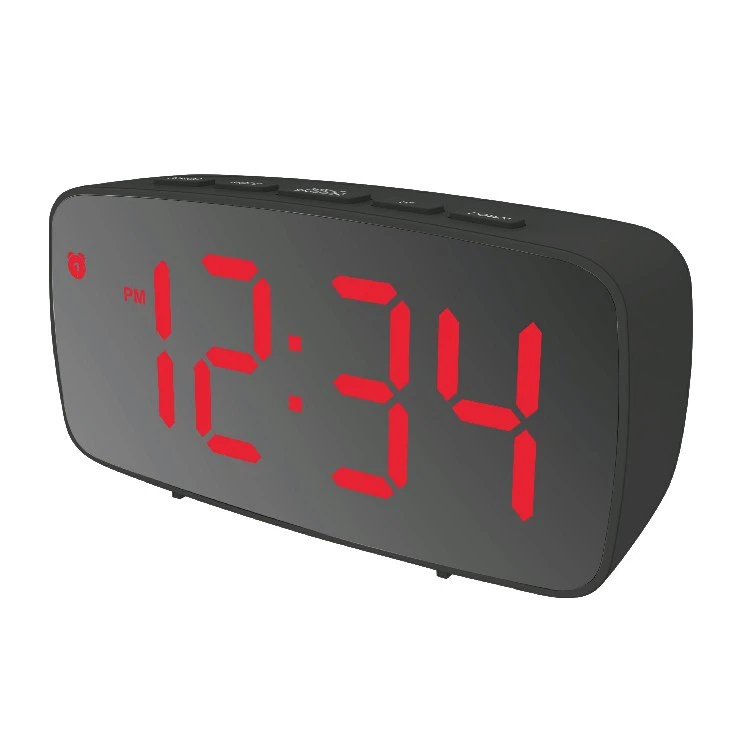
Some advanced LED alarm clocks, like the BIG LED Digital Clock, come with large, bright displays and additional functionality. While these features enhance the user experience, they also draw more power from the batteries.
2. Display Brightness
The brightness of the LED display is another major factor. Higher brightness levels require more power. If you set your LED alarm clock to its maximum brightness, the batteries will drain faster compared to when it's set to a lower brightness setting. Some clocks, such as the LED Clock for Bedroom, allow you to adjust the brightness according to your needs. You can reduce the brightness at night, which not only helps save battery but also prevents the clock from being too bright and disturbing your sleep.
3. Battery Quality
The quality of the batteries you use matters a great deal. High - quality alkaline batteries tend to last longer than generic or low - quality batteries. Rechargeable batteries can also be a good option, especially if you use your LED alarm clock frequently. However, it's important to note that rechargeable batteries have a lower voltage compared to alkaline batteries, which might affect the performance of some clocks.
4. Usage Patterns
How often you use the alarm and other functions of the clock also impacts battery life. If you set multiple alarms throughout the day or use the snooze function frequently, the clock will consume more power. Similarly, if you frequently check additional features like temperature or adjust the settings, it will put more strain on the batteries.
Estimating Battery Life
On average, a basic LED alarm clock with a simple time display and a single alarm function, using high - quality alkaline AA batteries, can last anywhere from 6 months to a year. However, if the clock has more features, such as a backlight, multiple alarms, and a temperature display, the battery life may be reduced to 3 - 6 months.
For example, a Good Sale Bedside Clock with standard features and used under normal conditions (average brightness, occasional use of the alarm) might have a battery life of around 4 - 5 months with AA alkaline batteries. If you switch to AAA batteries, the battery life will likely be shorter, perhaps around 2 - 3 months.
Tips to Extend Battery Life
1. Adjust Brightness
As mentioned earlier, reducing the brightness of the LED display can significantly extend battery life. Most LED alarm clocks allow you to adjust the brightness levels easily. Set the brightness to the lowest level that still allows you to read the time clearly.
2. Limit Feature Usage
Try to limit the use of additional features. For example, if you don't need the temperature display or multiple alarms, turn them off. Use the snooze function sparingly, as it requires the clock to stay in an active state and consume power.
3. Use High - Quality Batteries
Invest in high - quality alkaline batteries or reliable rechargeable batteries. Although they may be more expensive upfront, they will save you money in the long run by lasting longer.

4. Check for Battery Drain
Sometimes, a clock may have a problem that causes excessive battery drain. If you notice that the batteries are draining much faster than expected, check for any signs of malfunction, such as a stuck button or a faulty display. If you suspect an issue, contact the manufacturer for support.
Conclusion
The battery life of an LED alarm clock can vary widely depending on several factors, including the clock's features, display brightness, battery quality, and usage patterns. By understanding these factors and following the tips provided, you can maximize the battery life of your LED alarm clock.
As a supplier of LED alarm clocks, I'm committed to providing high - quality products that offer a good balance between features and energy efficiency. If you're interested in purchasing LED alarm clocks for your home, office, or for resale, I invite you to contact me for more information and to discuss your specific requirements. Whether you're looking for a basic clock or a feature - rich model, I can help you find the perfect LED alarm clock to meet your needs.
References
- "Battery Basics for Consumer Electronics." Battery University.
- "Energy - Efficient Lighting Technologies." U.S. Department of Energy.