

What is the lifespan of a Digital LED Clock?
Nov 18, 2025
Hey there! As a supplier of Digital LED Clocks, I often get asked about how long these nifty time - tellers last. So, let's dig into the lifespan of a Digital LED Clock.
First off, what actually is a Digital LED Clock? Well, it's a clock that uses Light - Emitting Diodes (LEDs) to display the time. These clocks come in all shapes and sizes, from the Good Sale Bedside Clock that you can keep on your nightstand to the BIG LED Digital Clock that can be seen from across a large room. And of course, there's the classic Digital LED Clock which is a staple in many homes and offices.
Now, to understand the lifespan, we need to look at the key components of a Digital LED Clock. The main parts are the LEDs themselves, the circuit board, and the power source.
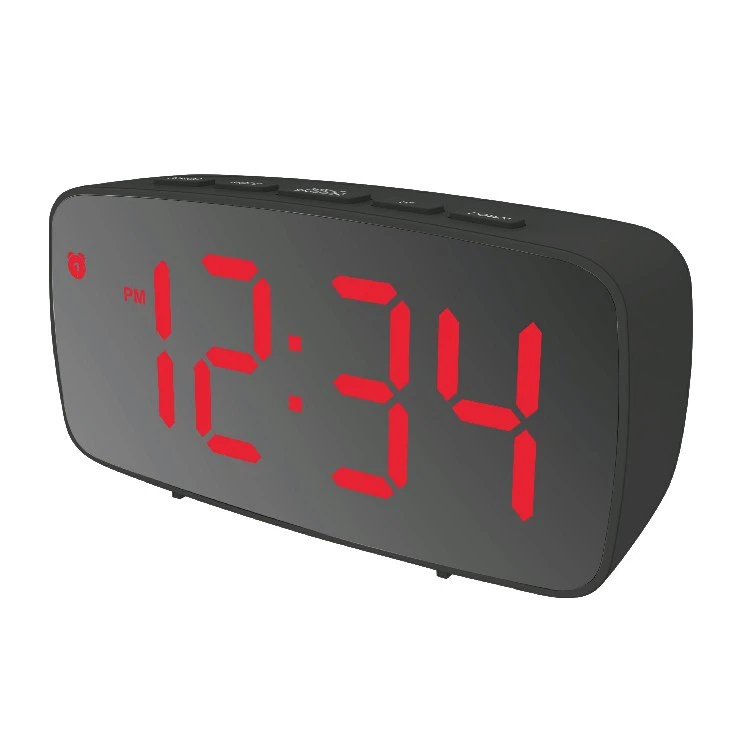

Let's start with the LEDs. LEDs are known for their long life. On average, high - quality LEDs can last anywhere from 50,000 to 100,000 hours. That's a really long time! To put it into perspective, if you run your clock 24 hours a day, 7 days a week, a 50,000 - hour LED would last over 5.7 years, and a 100,000 - hour LED would last more than 11.4 years. But in real - world scenarios, most people don't keep their clocks on all the time. For example, if you use your bedside clock only at night, say 8 hours a day, a 50,000 - hour LED could last over 17 years!
The quality of the LEDs matters a lot. Cheaper clocks might use lower - quality LEDs that have a shorter lifespan. These LEDs could start to dim or fail after as little as 10,000 to 20,000 hours. So, when you're looking to buy a Digital LED Clock, it's worth spending a bit more on a clock with high - quality LEDs.
Next up is the circuit board. The circuit board is like the brain of the clock. It controls how the LEDs display the time and manages other functions like setting alarms. A well - made circuit board can last a long time, often as long as the LEDs themselves. However, factors like heat, humidity, and electrical surges can affect its lifespan.
Heat is a big enemy of circuit boards. If a clock is placed in a hot environment, like near a heater or in direct sunlight, the components on the circuit board can overheat. This can cause the solder joints to weaken and the electronic components to degrade faster. Humidity can also be a problem. Moisture can corrode the metal parts on the circuit board, leading to malfunctions. Electrical surges, which can happen during power outages or lightning storms, can fry the sensitive components on the board.
To protect the circuit board, it's a good idea to place your Digital LED Clock in a cool, dry place. You might also want to use a surge protector if you're in an area prone to electrical surges.
The power source is another important factor. Most Digital LED Clocks can be powered by either batteries or an AC adapter. If you're using batteries, the lifespan of the clock in terms of continuous operation depends on the type and quality of the batteries. Alkaline batteries usually last longer than zinc - carbon batteries. For example, a set of high - quality alkaline batteries in a small Digital LED Clock might last 6 to 12 months, depending on the power consumption of the clock.
On the other hand, if you're using an AC adapter, the lifespan of the power supply itself can vary. A good - quality AC adapter can last many years, but a cheap one might fail sooner. It's important to use a power supply that's compatible with your clock to avoid any electrical issues that could shorten the clock's lifespan.
Another aspect that can affect the lifespan of a Digital LED Clock is how often you use its additional features. For example, if your clock has a backlight that you use frequently, it will put more strain on the LEDs and the circuit board. Similarly, if you set and change alarms often, the alarm - setting mechanism on the circuit board will be used more, which could potentially wear it out faster.
Now, let's talk about signs that your Digital LED Clock is reaching the end of its lifespan. One of the most obvious signs is when the LEDs start to dim or flicker. This could mean that the LEDs are starting to fail. Another sign is if the clock starts to lose time or the alarms stop working. This could indicate a problem with the circuit board.
If you notice any of these signs, you might be able to replace the LEDs or the circuit board if you're handy with electronics. However, in many cases, it might be more cost - effective to just buy a new clock.
As a supplier, I've seen a wide range of Digital LED Clocks in my time. I've noticed that clocks that are well - maintained and made with high - quality components tend to last a long time. And I can tell you, there's nothing quite like a reliable Digital LED Clock to keep you on schedule.
Whether you're looking for a bedside companion or a clock for your office, our range of Digital LED Clocks offers something for everyone. We take pride in providing high - quality clocks that are built to last.
If you're interested in purchasing our Digital LED Clocks in bulk for your business or just want to learn more about our products, don't hesitate to reach out. We're always happy to discuss your needs and answer any questions you might have. Let's have a chat about how we can provide you with the perfect Digital LED Clocks for your requirements.
References:
- "LED Lighting Handbook" by various industry experts
- Research papers on the longevity of electronic components in consumer products