

What is the minimum time setting on a mechanical timer?
Jan 15, 2026
As a supplier of mechanical timers, I often get questions from customers about the minimum time setting on these nifty devices. So, I thought I'd take a moment to dive into this topic and share some insights.
First off, let's talk about what a mechanical timer is. It's a device that uses mechanical components like gears, springs, and levers to measure and keep track of time. Unlike digital timers that rely on electronics and software, mechanical timers are simple, reliable, and don't need batteries or an electrical outlet to work. They've been around for ages and are still widely used in many settings, from kitchens to workshops.
Now, the minimum time setting on a mechanical timer can vary depending on the type and design of the timer. Some mechanical timers can be set for as little as a few minutes, while others may have a minimum setting of 10 or 15 minutes.
For instance, the Countdown Mechanical Timer we offer has a pretty flexible minimum time setting. It can be set for as low as 1 minute. This makes it perfect for quick tasks like timing a short microwave meal or a brief exercise interval. You just turn the dial to the desired time, and when the time's up, it'll give a little click or ring to let you know.
On the other hand, our 60 Minutes Mechanical Timer has a minimum setting of 5 minutes. This timer is great for tasks that take a bit longer but don't need super precise timing. It's often used in classrooms for things like timed quizzes or in the kitchen for slow - cooking a pot of soup.

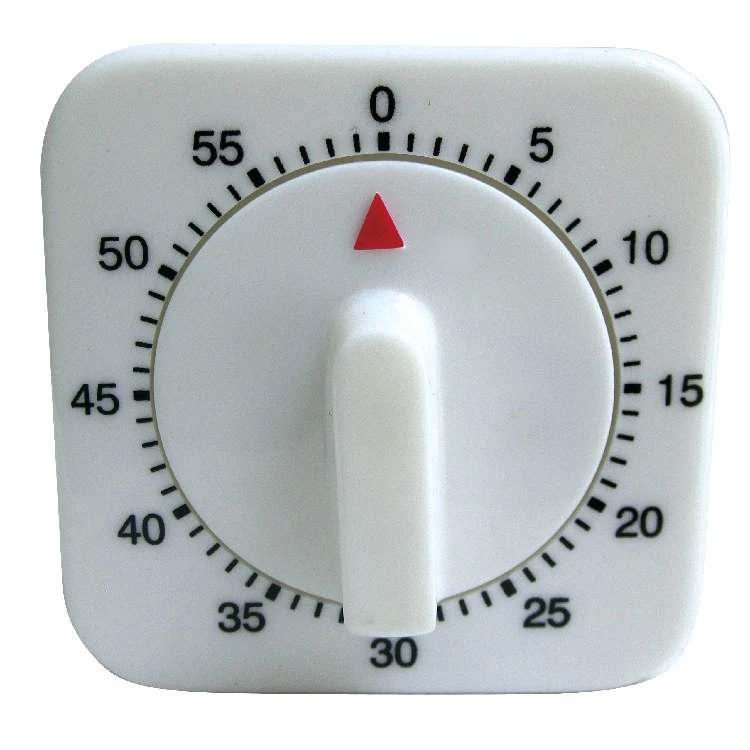
The Magnetic Kitchen Timer also has its own minimum time setting. It can be set to 2 minutes at the minimum. The magnetic feature makes it convenient to stick on your fridge, so you can easily keep an eye on your baking or boiling water on the stove.
Why do different mechanical timers have different minimum time settings? Well, it comes down to the internal mechanics of the timer. The gears and springs inside are designed to work in a certain way to measure time accurately. For a timer with a very short minimum setting, the gears need to be able to move and measure small increments of time precisely. This requires more complex engineering and smaller, more precisely - machined components.
In a timer with a longer minimum setting, the internal mechanism can be a bit more straightforward. The gears are designed to move and measure time in larger chunks, making the timer simpler and often more cost - effective to produce.
Another factor that affects the minimum time setting is the intended use of the timer. If a timer is meant for things like cooking short - duration foods or doing quick tasks, it will likely have a lower minimum setting. But if it's for general time - keeping in a workshop or classroom, where time intervals are usually longer, a higher minimum setting may be sufficient.
When you're choosing a mechanical timer, it's important to think about what you'll be using it for. If you need to time very short intervals, make sure to pick a timer with a low minimum setting like the ones I mentioned earlier. But if you're mainly timing longer tasks, you might be able to get away with a timer that has a higher minimum setting.
One of the great things about mechanical timers is their durability. Since they don't rely on electronics, they're less likely to break down due to power surges or software glitches. They can withstand a bit of rough handling, making them a reliable option for many environments.
Mechanical timers also have a certain charm. They're simple to use, no need to read a fancy digital display or figure out a complicated menu. You just turn the dial, and you're good to go. It's old - fashioned technology done right.
As a supplier, I've seen firsthand how useful mechanical timers can be. They're not just tools; they're a staple in many households and workplaces. And with the right minimum time setting, they can make your life a lot easier.
If you're in the market for a mechanical timer, whether it's for your kitchen, workshop, or classroom, we've got a wide range of options to choose from. Our timers are made with high - quality materials and are designed to last. We understand that different customers have different needs when it comes to time settings, so we've made sure to offer a variety of choices.
If you have any questions about our mechanical timers or need help deciding which one is right for you, don't hesitate to reach out. We're here to make sure you get the perfect timer for your requirements. Whether you need a timer with a very low minimum setting for those short - term tasks or a more general - purpose timer with a higher minimum setting, we can assist you.
Contact us today to start the procurement process and get a mechanical timer that fits your needs like a glove. We look forward to working with you!
References
- General knowledge about mechanical timers from industry experience.
- In - house product specifications of the mechanical timers we supply.