

What is the power consumption of an LCD wall clock?
Dec 04, 2025
Hey there! As a supplier of LCD wall clocks, I often get asked about the power consumption of these nifty time - keepers. So, I thought I'd sit down and write a blog post to clear up any confusion and give you all the deets.
Let's start with the basics. An LCD wall clock, like the ones you can find on our LCD Wall Clock page, uses a liquid - crystal display to show the time. Unlike some other types of clocks, LCD clocks are known for being pretty energy - efficient.
The power consumption of an LCD wall clock mainly depends on a few factors. First off, the size of the clock matters. A larger clock with a bigger display will generally use more power than a smaller one. That's because there are more pixels in the display that need to be powered to show the time clearly.
Another factor is the backlighting. Some LCD wall clocks come with backlighting, which can make the clock easier to read in low - light conditions. However, this backlighting also adds to the power consumption. If you're someone who wants to save as much energy as possible, you might want to opt for a clock without backlighting or one with a very low - power backlighting option.
On average, a basic, non - backlit LCD wall clock might consume anywhere from 0.01 to 0.05 watts of power. That's seriously low! To put it into perspective, a standard LED light bulb might use around 6 to 10 watts. So, you can see that an LCD wall clock is a real energy - saver.
If the clock has backlighting, the power consumption will increase, but it still won't be too crazy. A clock with a simple, low - intensity backlight might use around 0.1 to 0.3 watts. Of course, if the backlight is more powerful or has fancy features like color changing or brightness adjustment, the power usage could be a bit higher.
Now, let's talk about how this compares to other types of wall clocks. For example, LED Display Wall Clock and LED Digital Wall Clock. LED clocks use light - emitting diodes to display the time. LED technology is also known for being energy - efficient, but the power consumption can vary depending on the size and complexity of the display.
In general, a simple LED digital wall clock might use around 0.1 to 0.5 watts. If the clock has a large display or lots of additional features like alarms, timers, or temperature displays, the power consumption can go up to 1 watt or more. So, while both LCD and LED clocks are energy - friendly, LCD clocks often have the edge when it comes to basic, low - power time - keeping.
One of the great things about the low power consumption of LCD wall clocks is that it means they can run on small batteries for a long time. Most basic LCD wall clocks can run on a single AA or AAA battery for several months, if not a year or more. This is not only convenient but also helps reduce waste since you won't be changing batteries as often.

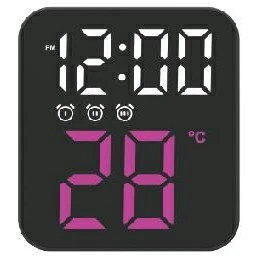
If you're using a clock that's plugged into an electrical outlet, the low power consumption also means that it won't add much to your electricity bill. You can have a stylish and functional clock in your home or office without worrying about breaking the bank on energy costs.
As a supplier, I know that many of our customers are looking for products that are both practical and environmentally friendly. That's why we focus on offering LCD wall clocks with low power consumption. We believe that by providing energy - efficient products, we can help our customers save money and reduce their carbon footprint.
If you're in the market for an LCD wall clock, whether it's for your home, office, or a commercial space, we've got a great selection. Our clocks come in a variety of styles, from simple and classic to modern and trendy. You can choose the size, features, and design that best suits your needs.
And if you're a business owner or someone looking to make a bulk purchase, we're more than happy to have a chat. We offer competitive pricing and excellent customer service. Whether you need a few clocks for a small business or hundreds for a large project, we can work with you to find the right solution.
So, if you have any questions about our LCD wall clocks, their power consumption, or anything else, don't hesitate to reach out. We're here to help you make the best choice for your time - keeping needs.
In conclusion, the power consumption of an LCD wall clock is impressively low, making it a great option for anyone who wants an energy - efficient and reliable time - piece. Whether you're concerned about saving money on your electricity bill or doing your part for the environment, an LCD wall clock is a smart choice.
References:
- General knowledge of electronics and clock technology in the industry.
- In - house testing of LCD wall clock power consumption.