

What is the refresh rate of the display on a big LED wall clock?
Dec 17, 2025
Hey there! As a supplier of BIG LED Wall Clock, I get a lot of questions about these nifty timepieces. One question that pops up quite often is, "What is the refresh rate of the display on a big LED wall clock?" Let's dig into this topic and find out!
Understanding Refresh Rate
First things first, let's talk about what refresh rate actually means. In simple terms, the refresh rate of a display refers to how many times per second the image on the screen is refreshed or updated. It's measured in Hertz (Hz). For example, a display with a refresh rate of 60 Hz updates the image 60 times every second.
For most of us, when we think about refresh rates, we might picture high - end gaming monitors or fancy TVs. But the concept also applies to LED wall clocks. A higher refresh rate can potentially mean smoother and more stable visuals on the clock's display.
Why Refresh Rate Matters for Big LED Wall Clocks
You might be wondering why the refresh rate is even important for a wall clock. After all, it's just showing the time, right? Well, there are a few good reasons.
1. Visual Stability
A clock with a low refresh rate might show some flicker. This flicker can be annoying, especially if the clock is in a place where you look at it frequently, like an office or a living room. A higher refresh rate helps to eliminate this flicker, providing a more stable and comfortable viewing experience.
2. Accurate Time Display
In a big LED wall clock, a proper refresh rate ensures that the time is displayed accurately. If the refresh rate is too low, there could be a slight delay in updating the time digits, which might not seem like a big deal, but in some settings, like a train station or a hospital, accurate timekeeping is crucial.
Typical Refresh Rates for Big LED Wall Clocks
Now, let's get to the numbers. Most big LED wall clocks have a refresh rate in the range of 50 Hz to 120 Hz.
- 50 - 60 Hz: This is a common range for many basic LED wall clocks. It's usually sufficient for general use, like in homes or small offices. At this refresh rate, the image is updated 50 or 60 times per second, which is usually enough to prevent significant flicker that the human eye can notice.
- 80 - 100 Hz: For more high - end or professional - grade LED wall clocks, you might see a refresh rate in this range. Clocks with a refresh rate of 80 Hz or higher tend to have even smoother visuals and less chance of any visible flickering. This is great for larger spaces where the clock needs to be clearly visible from a distance.
- 120 Hz: A 120 Hz refresh rate is on the higher end for LED wall clocks. Clocks with this refresh rate offer incredibly smooth and stable displays. However, they also tend to be more expensive due to the advanced technology required to achieve this high refresh rate.
Factors Affecting the Refresh Rate
The refresh rate of a big LED wall clock isn't just a fixed number. There are several factors that can influence it.
1. Display Technology
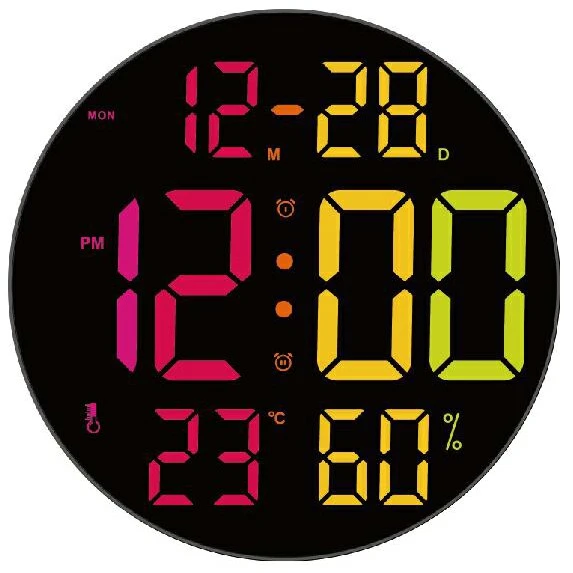
The type of LED technology used in the clock plays a big role. Some newer LED technologies are capable of achieving higher refresh rates more easily than older ones. For example, some full - color LED displays might have different refresh rate capabilities compared to single - color LED displays.

2. Cost
As I mentioned earlier, clocks with higher refresh rates are generally more expensive. Manufacturers need to use better components and more advanced drivers to achieve a higher refresh rate. So, if you're on a budget, you might have to settle for a clock with a lower refresh rate.
3. Power Consumption
Higher refresh rates usually mean more power consumption. This is because the display has to be updated more frequently. For some applications, like in a 24/7 operation where power costs are a concern, a lower refresh rate might be a more practical choice.
Comparing with Other Types of Wall Clocks
It's also interesting to compare the refresh rates of big LED wall clocks with other types of wall clocks, like LED Digital Wall Clock and LCD Wall Clock.
LED Digital Wall Clocks
These are similar to big LED wall clocks, but they might come in different sizes and styles. The refresh rates of LED digital wall clocks are often in the same range as big LED wall clocks. However, smaller digital clocks might have slightly different requirements and capabilities when it comes to refresh rates.
LCD Wall Clocks
LCD wall clocks typically have a different refresh rate characteristic compared to LED clocks. LCDs generally have a slower response time, which means the refresh rate might not be as high as that of an LED clock. This can sometimes result in a slightly less smooth display, but it's usually not a big issue for basic timekeeping.
Making the Right Choice
So, how do you choose the right big LED wall clock based on the refresh rate? Here are some tips:
- Consider the Location: If the clock is going to be in a place where you'll be looking at it for long periods, like a classroom or an office, a higher refresh rate (80 Hz or above) is a good idea to avoid eye strain.
- Budget: If you're on a tight budget, a clock with a 50 - 60 Hz refresh rate can still do the job just fine. You can focus on other features like size and color instead.
- Functionality: If the clock is for a professional setting where accurate timekeeping is critical, a higher refresh rate can help ensure that the time is displayed accurately.
Get in Touch for Your LED Wall Clock Needs
If you're in the market for a big LED wall clock and have more questions about refresh rates or other features, don't hesitate to reach out. We're here to help you find the perfect clock for your needs. Whether you need a clock for a commercial space, a public area, or your home, we've got a wide range of options to choose from.
References
- "Display Technology Basics" - A basic guide on display technologies and refresh rates.
- Industry reports on the latest trends in LED wall clock technology.